How a wood stove quietly dismantles the clock and rebuilds your day from scratch.
01The fire sets the tempo
You wake not because an alarm has fired, but because the cabin has grown cold. The stove has been burning low for an hour, and the air near the floor carries a particular damp stillness that the body registers before the mind does. You get up. You feed it — two split birch, one larger log angled against the back — and the immediate task is so concrete, so entirely without ambiguity, that something in you loosens. There is nothing to decide. The fire needs feeding. You feed it. The day begins.
This is what nobody mentions about cabin life: the stove doesn't just heat the room. It organises it. Within half a day, you stop checking the time in any conventional sense and start reading the fire instead. How far down has the log burned? Is there enough heat stored in the cast iron to carry through the next two hours, or should you add wood now? These are genuine, answerable questions. They replace an entire architecture of pings, alerts, and half-finished tasks that, back in the ordinary world, constitutes your sense of forward motion.
- Before lightThe cabin cools; you rise to feed the stove. Nothing to decide.
- Mid-morningThree armfuls of split wood carried in from the lean-to.
- AfternoonA walk, taken while the stove is well-stoked and can be left.
- DuskThe stove becomes the room’s whole centre of gravity.
- Last thingThe fire banked, the damper pulled down to a slow burn.
02Measured in armfuls
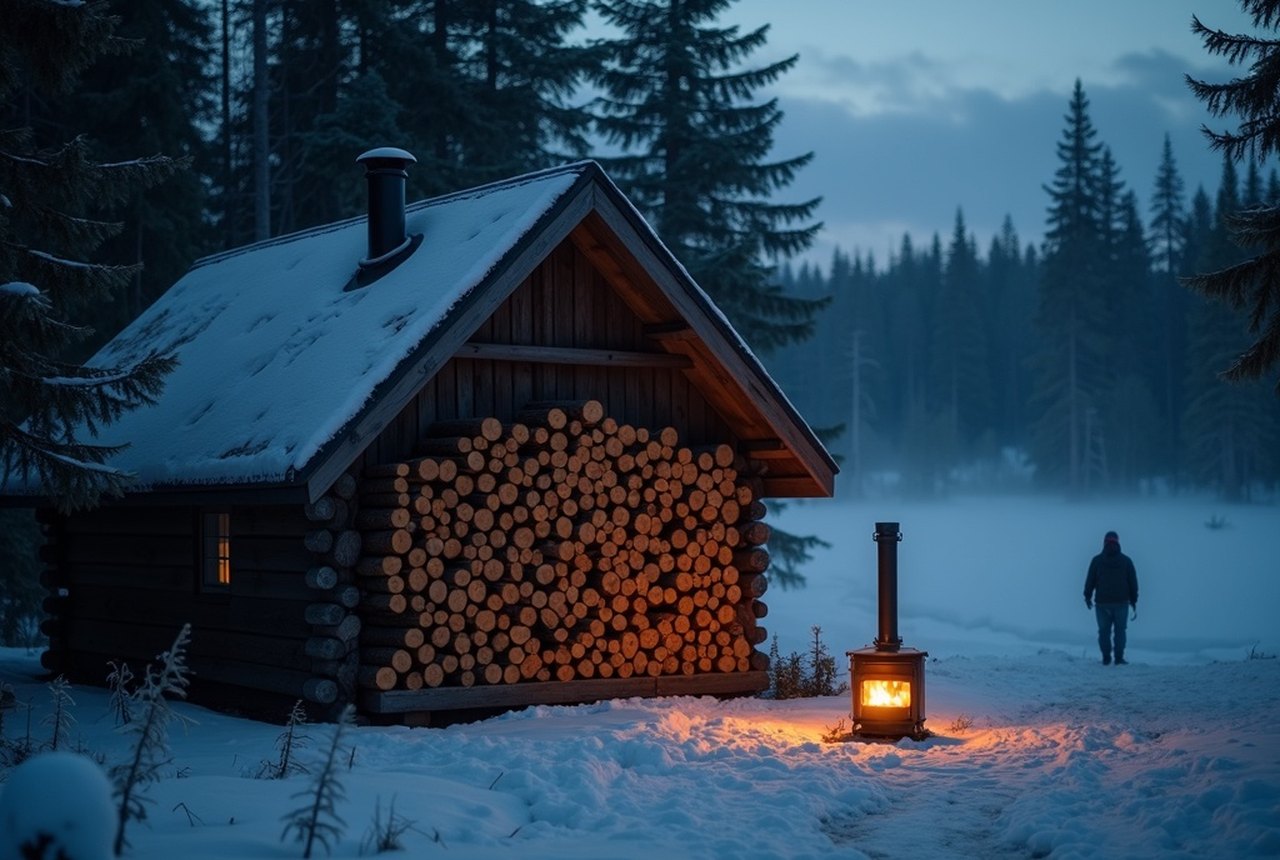
By mid-morning you have carried three loads of split wood from the lean-to beside the cabin. The work is short — a minute, maybe two each time — but it punctuates the hours in a way that feels both deliberate and completely natural. You begin to think of time not in segments but in volumes: this much wood for the afternoon, this much for the long evening, a little held back against the deep cold before dawn. It is planning, but a slow, physical kind. Nothing about it is abstract.
There is genuine pleasure in the stack. The way a good split log lands cleanly on top of the pile. The smell of resin when the maul finds a knotted piece and the grain finally gives. These small sensations accumulate through the day and they are doing something — they are furnishing attention with objects it can actually hold. Attention that, for most of the working week, is scattered across surfaces it cannot touch and problems it cannot solve before lunch.
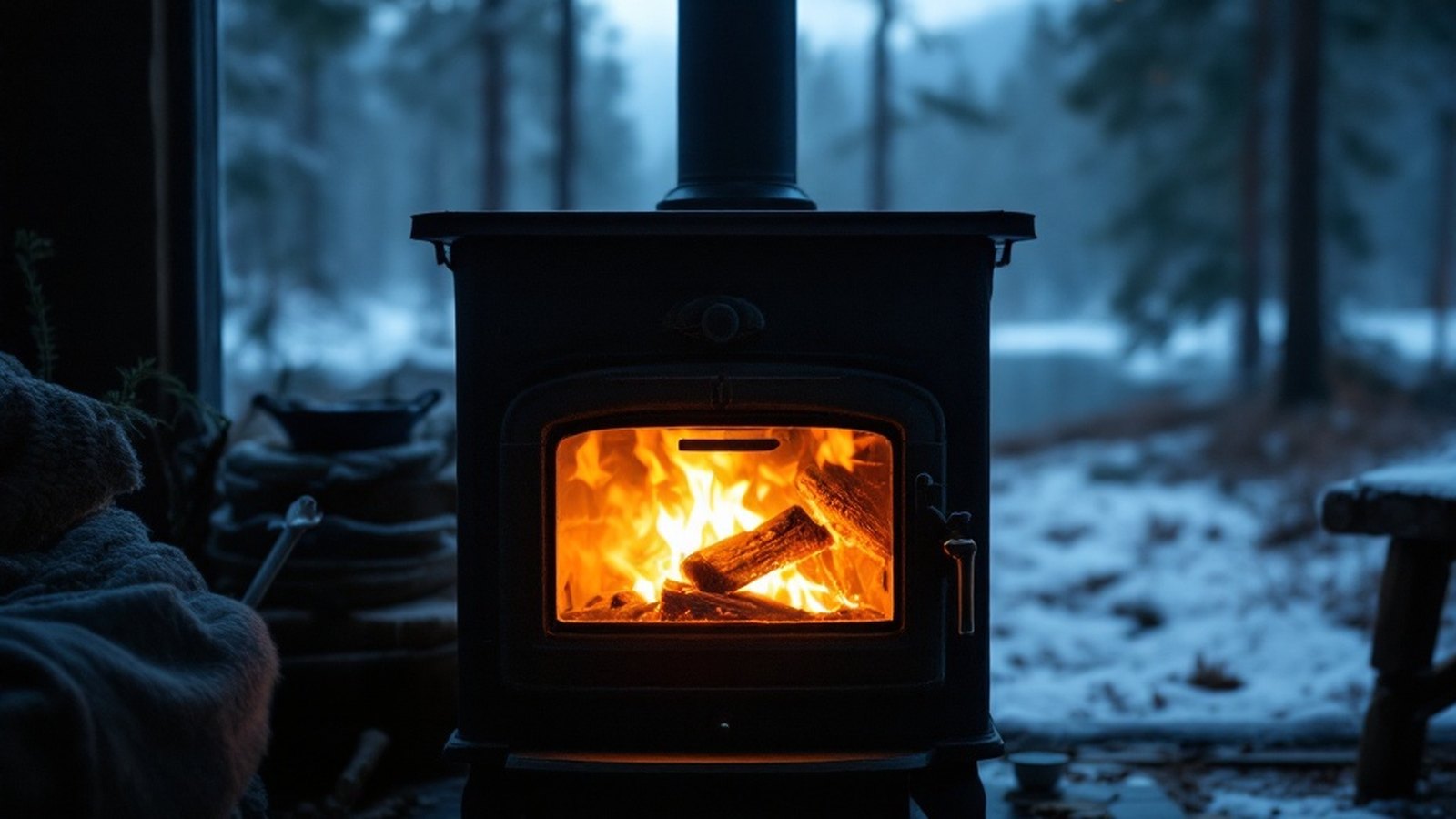
The stove itself has a character you learn to read. A single pane of glass in the door, if the cabin has it, lets you watch the combustion shift from cautious orange to a steadier, quieter glow. The iron ticks as it expands. There is something almost social about it — you check in, you adjust, you leave it to work. It is the only relationship in the cabin that asks something of you at regular intervals, and it asks something manageable.
03The long evening
By late afternoon the arrangement of your day has become clear, and it has arranged itself entirely around warmth. You walked when the stove was well-stoked and could be left. You read in the chair closest to it. You made coffee when you went to add wood, because you were already up. The logic is circular and surprisingly satisfying: activity flows outward from the fire and eventually curves back.
Evening arrives with the light dropping behind the treeline, and now the stove becomes the room's whole centre of gravity. The temperature outside has fallen sharply — you felt it when you stepped out to look at the lake, the cold arriving not gradually but all at once, the way it does in the north. Inside, the warmth is earned. It has cost you attention and small effort all day, and you feel the justice of that. You didn't set a timer; you read a living thing and responded.
Tending something real, over hours, gives the day a spine.
This is what a notification cannot replicate: the way tending something real, over hours, gives the day a spine. Not a schedule exactly — schedules are imposed — but a rhythm that emerges from the work itself, from the specific demands of cast iron and dry wood and a cold that means business. By the time you bank the fire for the night, pulling the damper down to a slow burn, you realise you haven't looked at your phone since mid-morning. You aren't sure where you put it. The thought arrives without urgency, and dissolves just as quietly into the warmth.