The forest has always told you what's coming. You just stopped listening.
01The language of clouds and air
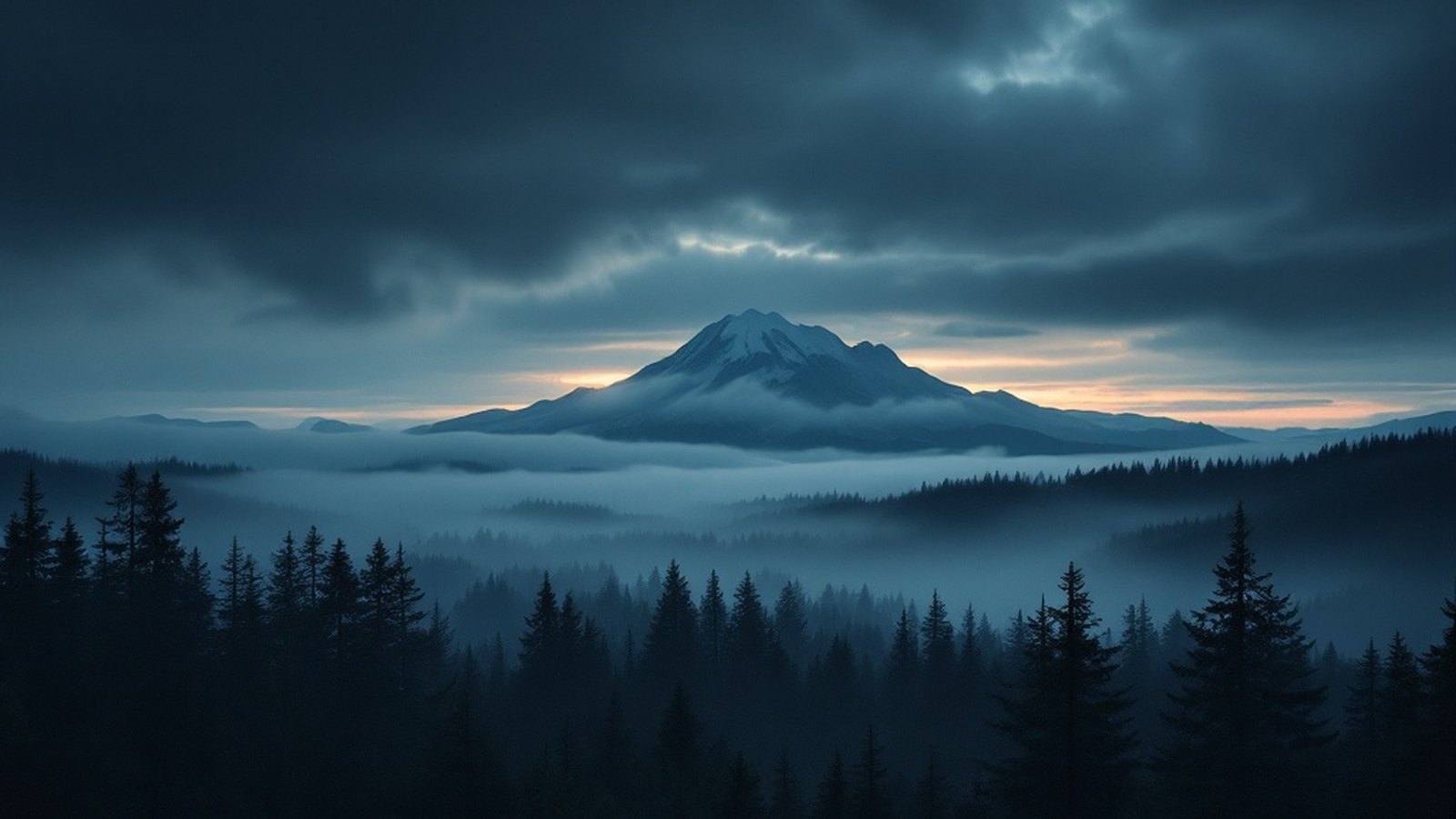
There is a particular quality of light that arrives before a storm — a greenish, underwater stillness — and once you have noticed it, you cannot un-notice it. The sky goes pewter at the edges first, not overhead. The clouds thicken from the west, their bases flattening as they lower, their upper edges cauliflowering upward with the energy of rising warm air. Cumulonimbus, the textbooks call them: anvil-topped, capable of enormous mischief. You don't need the word to read them. You need only to watch how the light changes and to register the faint drop in your chest that something large is building.
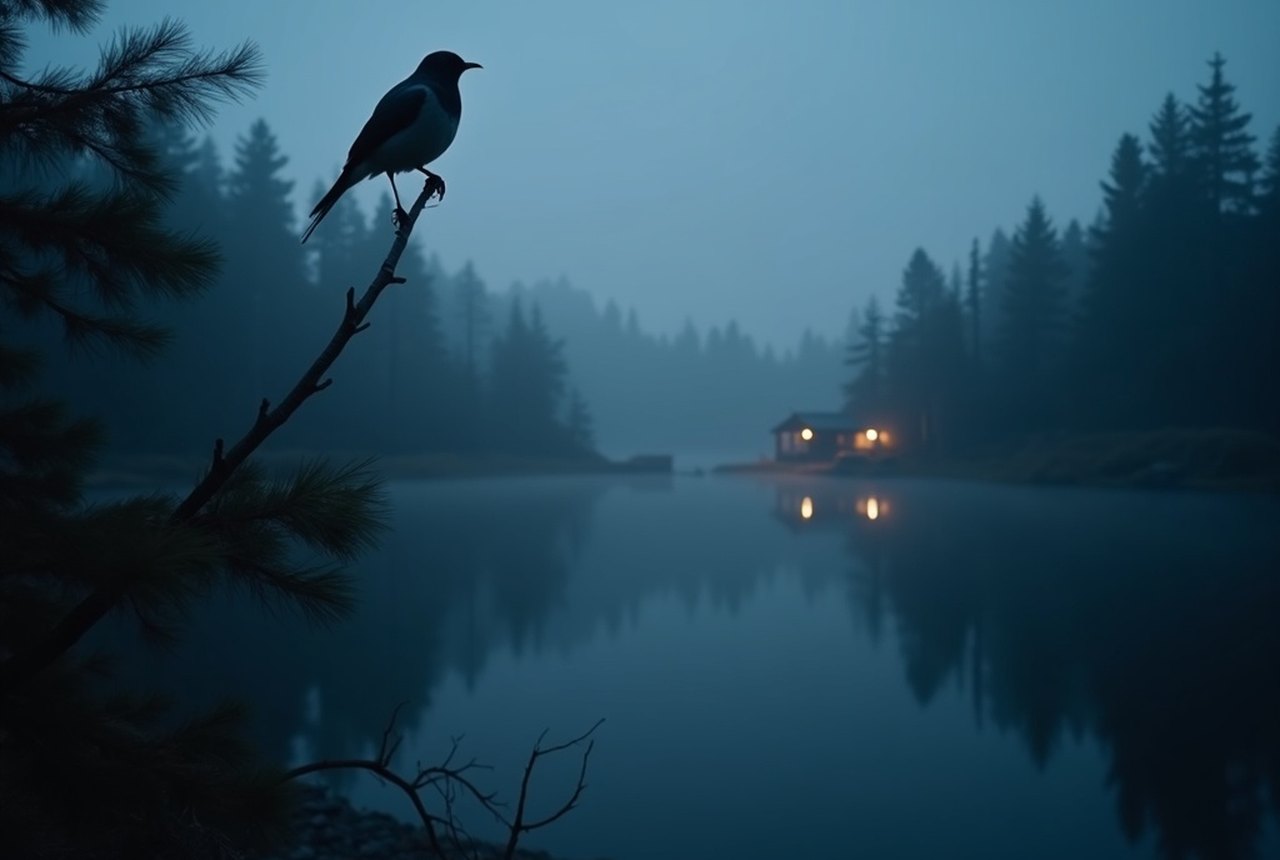
Pressure is the thing. Falling barometric pressure draws storms in; your body feels it before you can name it. Joints ache faintly. The air thickens in the lungs. Insects drop close to the water's surface, following the pressure gradient toward lower altitude, and the swallows that chase them drop low with them. Watch the birds. They are, in every sense, ahead of you.
Wind shift is equally legible. A steady breeze that has blown from one direction all morning will back slightly — rotating counterclockwise — as a front approaches in the northern hemisphere, then veer sharply once the front has passed through. Run a damp finger up; let the cold side tell you where the wind is coming from. Notice when it picks up without warning in the canopy, shaking the higher branches before you feel anything at ground level. The trees register the change before you do.
| The sign | The reading |
|---|---|
| A greenish, underwater stillness in the light | Something large is building |
| Cloud bases flatten and lower; tops cauliflower upward | Rising warm air feeding a storm cell |
| The steady breeze backs, then veers sharply | A front approaching, then passing through |
| Insects and swallows drop low over the water | Barometric pressure falling |
| A clean, metallic edge on the air | Electrical activity in distant cloud |
| The canopy goes suddenly, administratively quiet | Rain, ten or twenty minutes out |
02What the nose knows, and the ears
Rain has a smell before it arrives. Petrichor — the word coined in the 1960s for the earthy scent released when rainwater meets dry ground or rock — actually arrives on the wind before the first drop falls, carried ahead of the approaching moisture. But there is something before even that: a mineral sharpness in the air, ozone produced by electrical activity in distant cloud cells, which reaches you as a clean, slightly metallic edge. Many people have smelled it all their lives without naming it. In the forest, away from traffic and concrete, the signal is unmistakable.
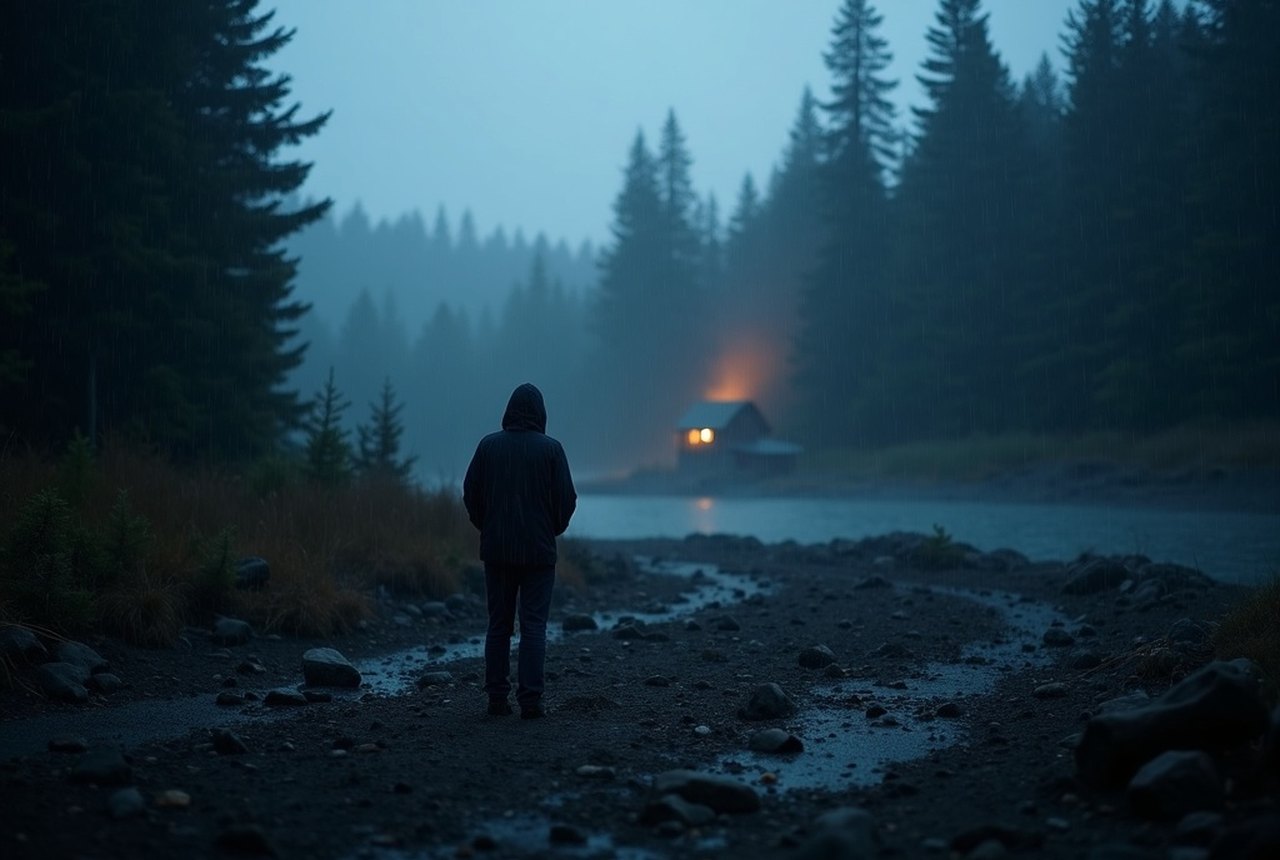
Then the forest goes quiet. Not the gradual quietening of dusk, which has its own rhythm and warmth, but a sudden, almost administrative silence — birdsong cutting off in sequence, the insects withdrawing, the whole canopy settling into a held breath. Birds sense infrasound, atmospheric electricity and pressure shifts through mechanisms still not entirely understood; they often stop singing ten or twenty minutes before a storm arrives. When the treeline falls silent mid-afternoon, it is telling you something unambiguous.
This kind of attention is not esoteric. It is what people who worked outdoors did as a matter of survival for most of human history, reading sky and wind and animal behaviour the way you now glance at a notification. The knowledge didn't disappear; it simply went dormant, outpaced by convenience.
Relearning it requires only slowness and repetition. Spend a morning watching one patch of sky. Notice the direction the clouds move relative to the ground wind — they often diverge, running at different heights and speeds, and their relationship tells you about the depth and organisation of the weather system above you. Notice what happens to the air an hour before a front. Keep a rough mental log of what you observed and what followed. Within a few days in the same place, patterns emerge.
There is a quiet competence on the far side of this practice. You stop needing to check; you start noticing. The ridge tells you to make camp early. The silence in the canopy tells you to bring the firewood under cover. The light tells you you have an hour, perhaps two.
None of this is prediction with any precision. But it restores something that apps efficiently erase: the experience of being in relationship with the weather, rather than simply notified by it.