On waking before the others, and what the cold water gives back
01Before the World Begins
There is a particular quality to the hour before anyone else stirs. The cabin holds its breath. You pull on layers in the dark — the rough wool jumper, the unlaced boots — and step outside into air that tastes faintly of pine resin and cold stone. The sky is not yet light so much as less dark, a deep blue-grey at the treeline that could be the beginning of anything.
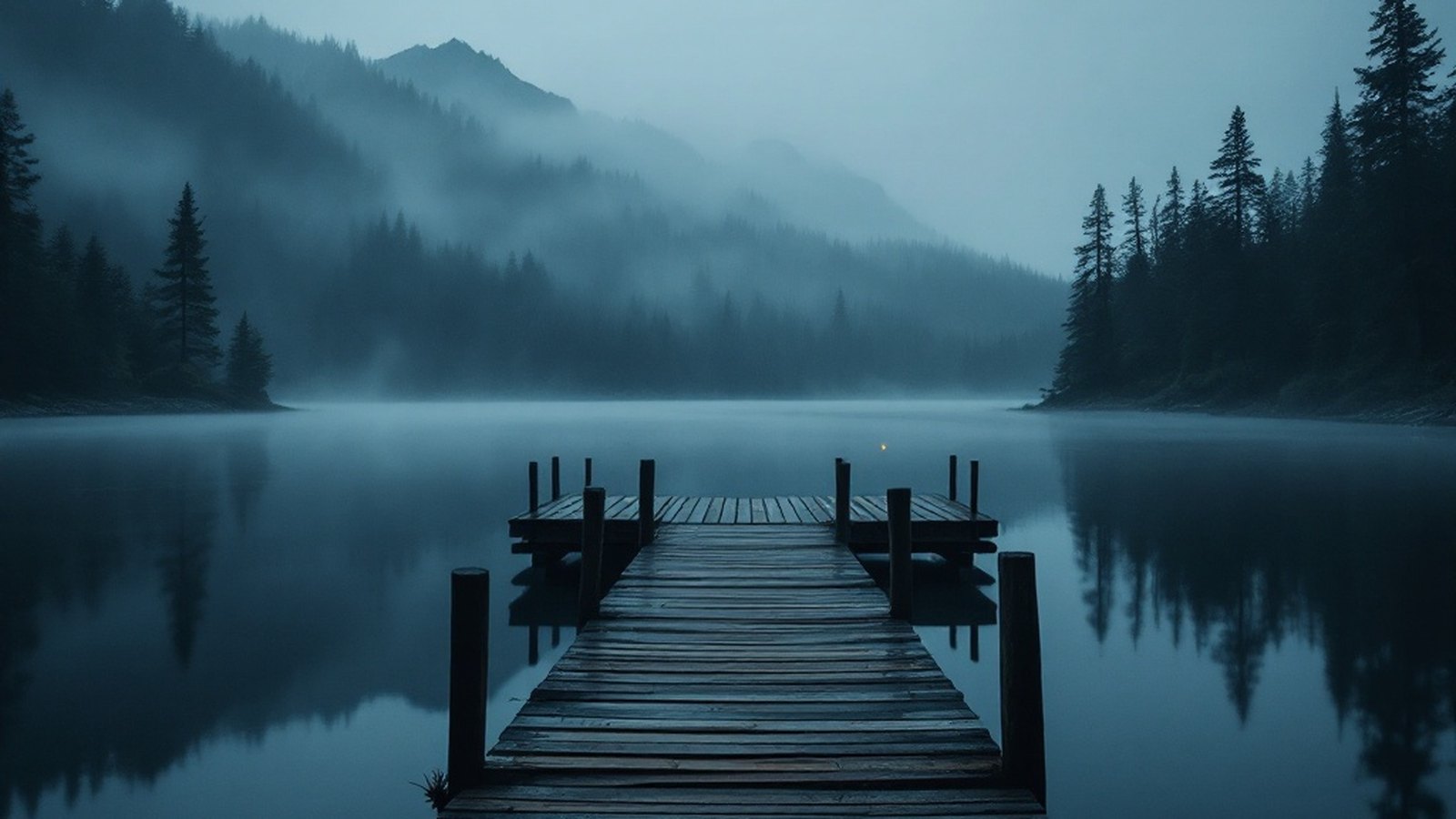
The jetty boards are wet. Not from rain — from the night itself, which has been breathing out over the water for hours. Each plank is dark and slightly soft underfoot, and the sound your steps make is hollow and private, a sound no one else will hear. At the far end of the jetty you stop, and the lake opens out in front of you.
Mist lies on the surface — not dramatically, not in great theatrical billows, but in thin, wandering ribbons that drift and dissolve and form again. The far shore is a suggestion rather than a fact. A heron stands somewhere to your left in the shallows, absolutely still, either watching the water or dreaming; it is impossible to say which. The lake is not silent — it is its own low frequency, a cold, faint exhalation — but it is quieter than anything your working life has prepared you for.
02The Cold Water
You will find reasons not to go in. This is normal. The body assembles its arguments in good faith: the air is cold, the water will be colder, the blanket is warm on the rail where you left it, there is no emergency here. Acknowledge all of this and go in anyway.
The cold is immediate and total. It silences the internal monologue — the deadlines, the unread messages, the thing you said three weeks ago that still surfaces at the wrong moment — not gently, but absolutely, in the way that a power cut silences a room. Your breath shortens, then steadies. The water holds you with complete indifference, and that indifference, unexpectedly, is a relief.
Cold-water immersion has been studied for its effects on mood and alertness — noradrenaline rises sharply in response to the shock, and the parasympathetic nervous system, once the initial alarm passes, eases into a kind of enforced calm. But you don't need the physiology to explain what is happening. You can feel it: the static cleared, the signal clean, the mind returned briefly to the simple fact of a body in cold water at first light.
Stay in for as long as feels honest — not long, probably. Two minutes. Perhaps three. Then pull yourself back onto the boards, which now feel warm compared to the lake, and reach for the blanket.
03The Blanket, the Stillness
This is the reward that the cold makes possible. The wool blanket wraps around your shoulders and you sit at the end of the jetty while the light begins to find its way into things. The heron, if you startled it when you swam, has returned to its post. The mist is thinning — you can see the far shore now, the dark tree-mass of it, the pale strip of light just beginning above. A duck moves across the water in a straight line, unconcerned, pulling a small wake behind it.
The others are still asleep. This hour belongs entirely to you, unshared and unobligated. You are not performing solitude or seeking anything in particular. You are simply here, damp and cooling and awake, watching the light change over the water with the slow, wordless attention you have not managed to give anything in recent memory.
The lake does not care that you needed this.
The lake does not care that you needed this. It would have been here anyway — the mist, the heron, the pale sky above the treeline. But you came, which is the only thing you could have controlled. You showed up at the end of the jetty in the dark, and the morning happened to you, and for a little while the rest of it fell away.
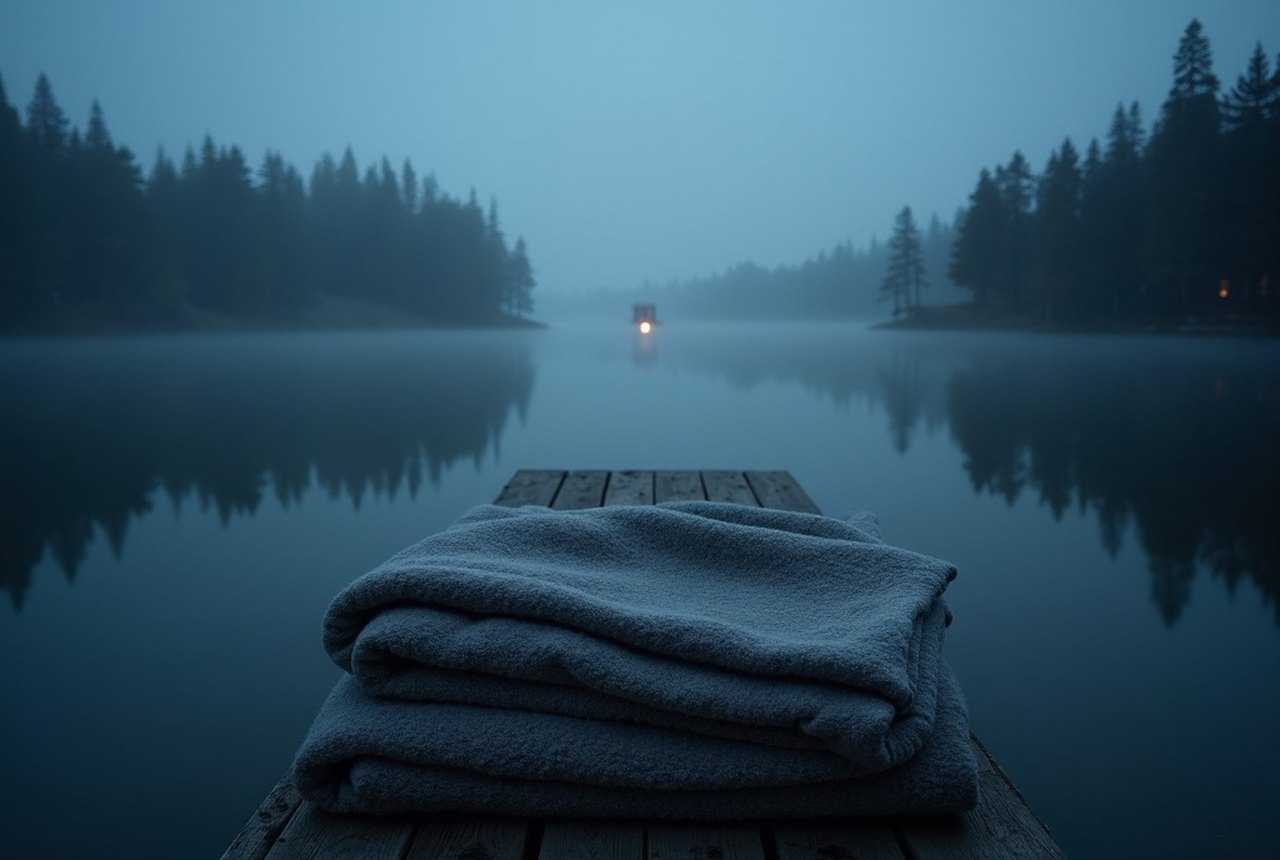
The blanket will still be damp when the others wake. Say nothing. Let them sleep.