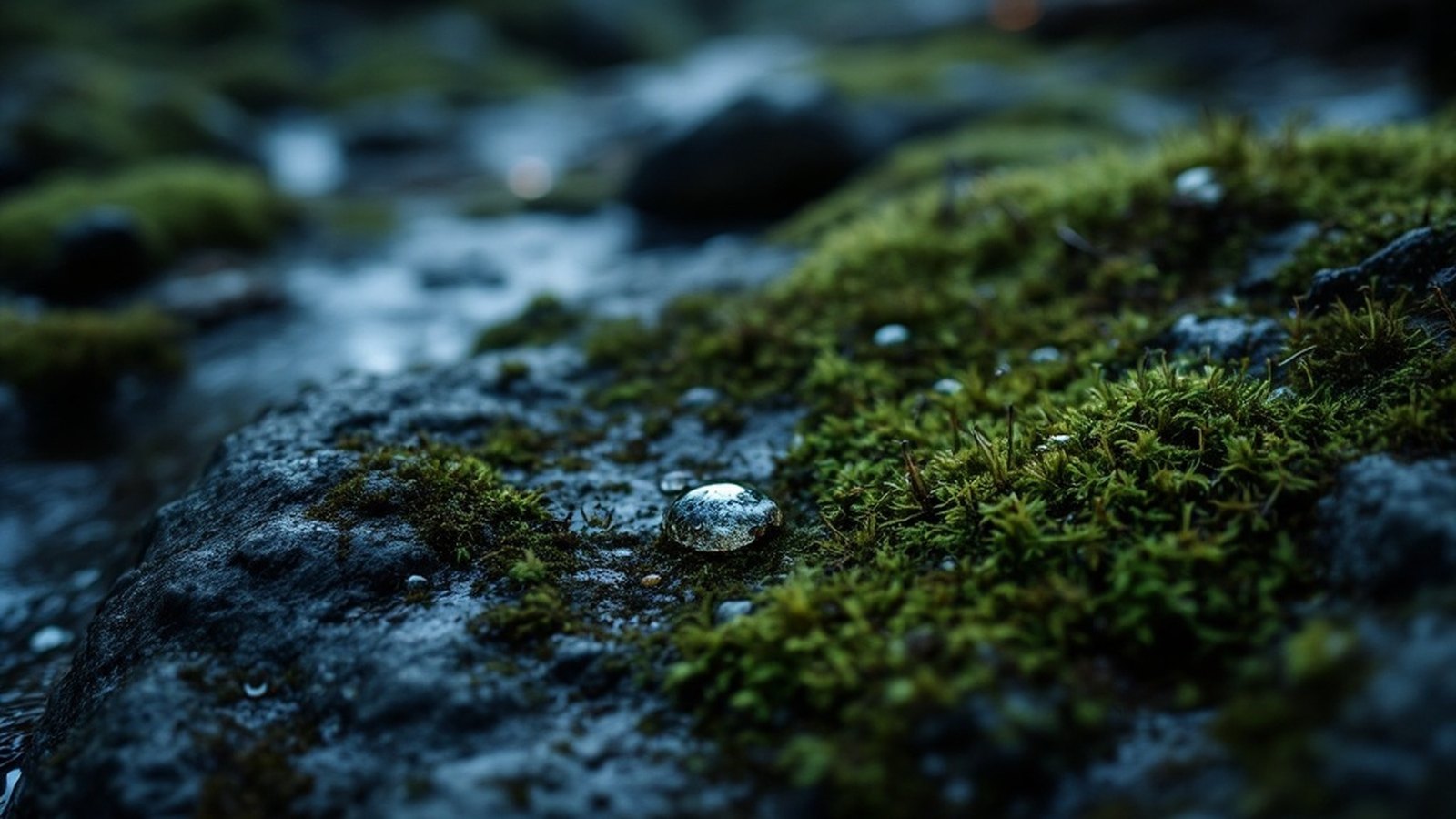
On the reward of kneeling down, and the quiet argument made by things that refuse to hurry.
01The ground has a different time zone
Get low enough and the world reorganises itself. Kneel beside a stream — not to drink, not to photograph it, just to be at its level — and you enter a different register of attention. The water doesn't rush. It negotiates. It finds the path of least argument, slipping between stones with the patience of something that has never once been in a hurry, and has no intention of starting.
The moss on those stones is older than your urgency. It grows perhaps a millimetre a year, building its dense, soft architecture the way a good thought builds: slowly, without announcement. Run a finger across it and it gives — lush, improbably tender, cool as the underside of sleep. This is what a decade of quiet looks like. This is what it feels like to have no agenda.
Lichen goes further. Some colonies growing on exposed rock — the grey-green crusts that map a boulder like an old continent — may be centuries old, possibly much older, their age impossible to read at a glance. They are not decorative. They are fundamental: among the first living things to colonise bare stone, breaking it down molecule by patient molecule, making soil from nothing. To crouch before a lichen-covered rock and think about what it has outlasted is to feel your own timeline become briefly, usefully small.
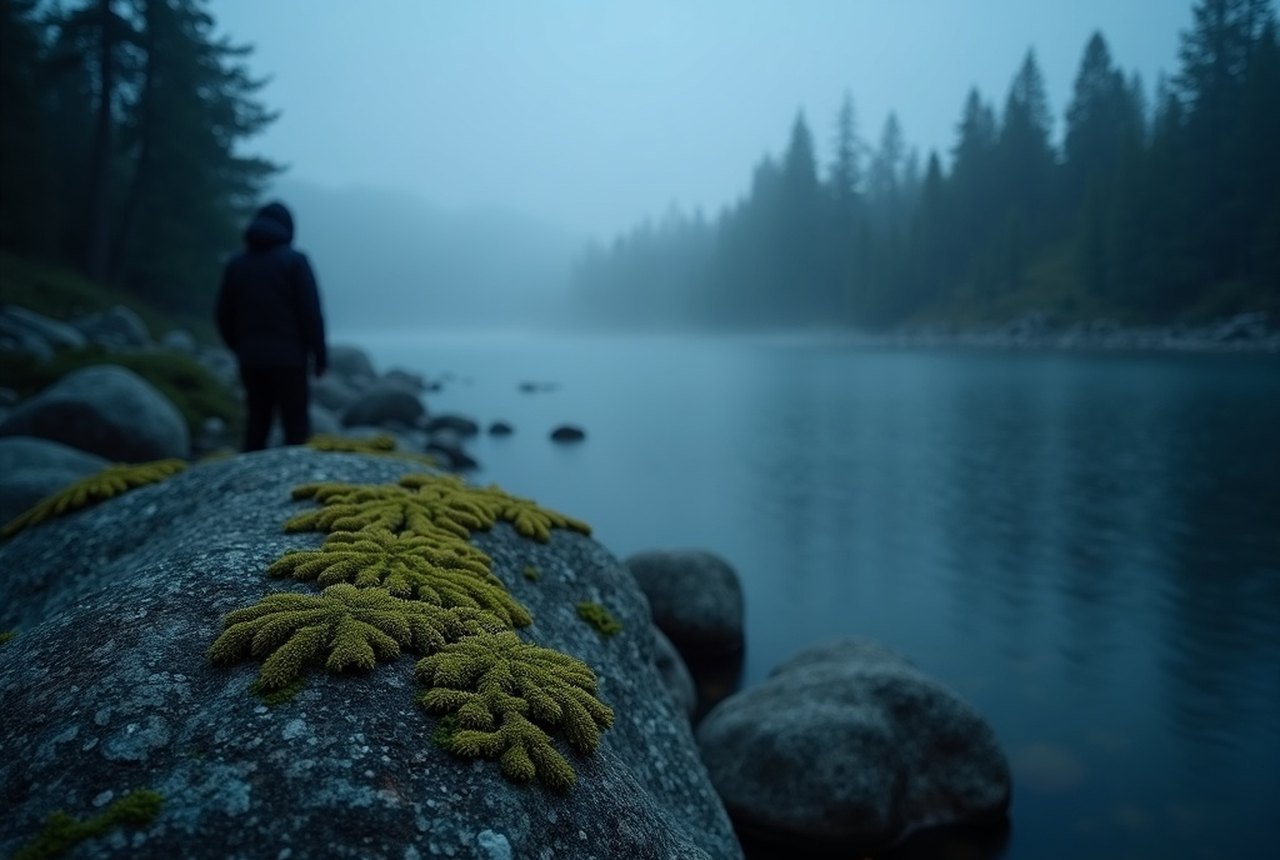
There is no instruction here, no mindfulness framework required. The slowness teaches without effort. You simply watch water find its level, watch light shift across a mat of Polytrichum or Sphagnum — the haircap, the bog moss — and something in your chest unclenches. The stream doesn't ask whether you're keeping up. The lichen doesn't care that you have thirty-seven unread messages and a decision you've been avoiding for six weeks.
What the forest floor offers, if you're willing to be uncomfortable on your knees for five minutes, is a recalibration. Not peace as an absence of noise, but peace as a different pace — one that predates the pace you arrived with, and will long outlast it.
Nothing here is performing. Nothing is optimised. It is simply, thoroughly, unhurriedly alive — and in that, it is the most radical thing you'll find in the woods.
The moss on those stones is older than your urgency.