
The guilt passes. What replaces it is better.
01The pull, and what's past it
You know the moment. The bag is unpacked, the kettle is on, rain is ticking against the window glass. The cabin is doing exactly what it's supposed to do — and then you think: just one email. Not to work. Just to check. Just to know. The laptop sits in the outer pocket of your bag like a mild accusation, and the silence suddenly has a texture you haven't felt in months.
This is the phantom pull: the nervous system doing what it has been trained to do, reaching for the next input before the last one has settled. It isn't laziness or addiction, exactly. It's closer to habit dressed as responsibility. The story you tell yourself is that staying vaguely available is professional, courteous, harmless. What it actually is, most of the time, is a way of not sitting still.
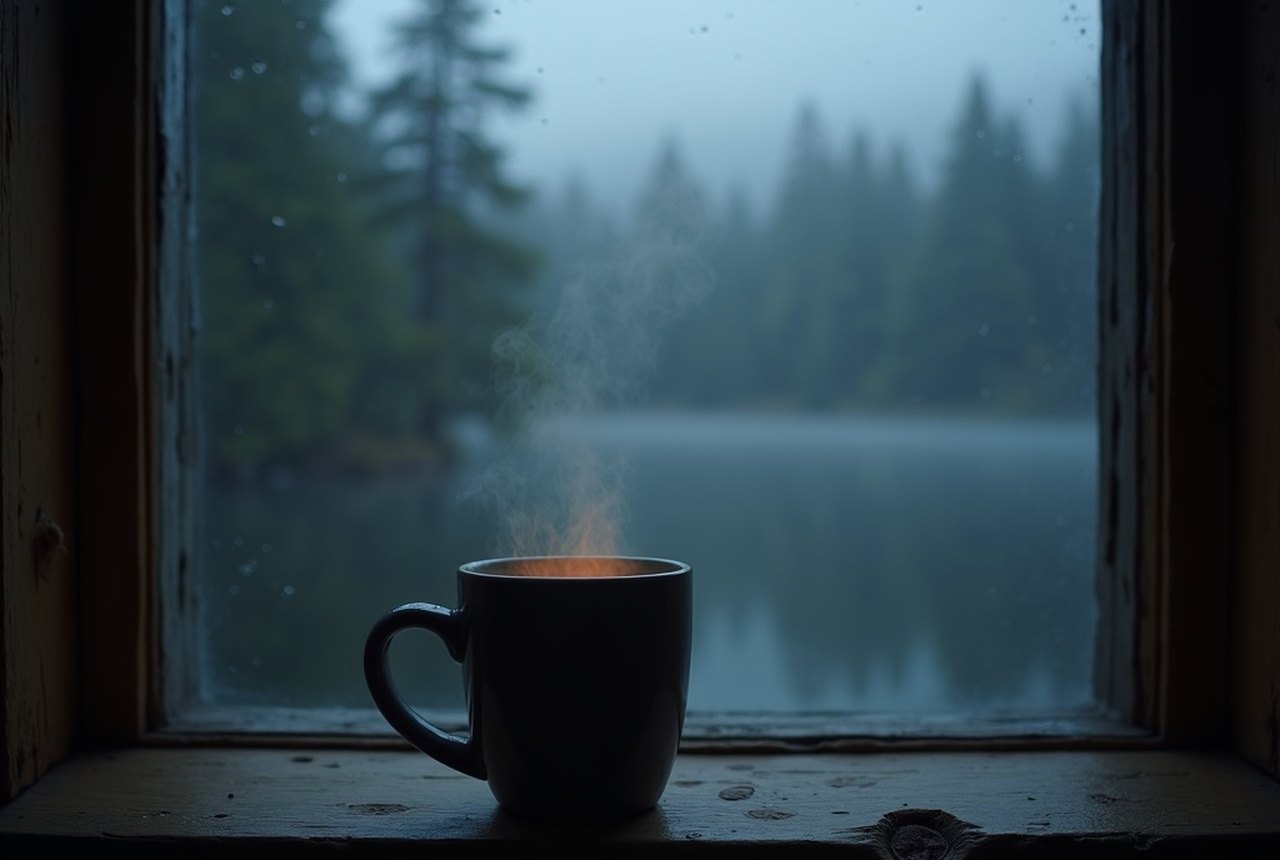
The guilt is real too — that low-grade hum that says someone, somewhere, may need a response. But guilt about unanswered email has a short half-life when you're somewhere with no signal and nowhere to be. By the second morning, the hum quiets. By the third, you stop listening for it.
By the second morning, the hum quiets. By the third, you stop listening for it.
What's on the other side is harder to name than it is to feel. A kind of mild astonishment at how long an afternoon can be. The discovery that the mind, left alone, begins to think in whole sentences rather than fragments. You notice things — the way the light flattens before dusk, the sound a branch makes when the wind drops, the specific quality of silence over still water. These are not poetic consolations. They are the ordinary contents of an afternoon when you have not pre-occupied every spare second.
Leaving the laptop shut is, at first, a discipline. You have to choose it repeatedly, the way you'd choose not to scratch an itch. But somewhere in the middle of the second day it becomes something else — less an act of restraint and more a simple fact of where you are. The bag stays in the corner. The kettle goes on again. Outside, the ridge is going dark in the way it does.
You can read about the importance of rest. You can agree with it entirely, in the abstract, from your desk. Or you can go somewhere the laptop stays closed and find out, again, what your own mind sounds like when it's allowed to run quiet.