What a single heated space teaches you about everything else you own
01The arithmetic of a small space
You notice it within an hour. There is nowhere to put things down except where they belong. The bag goes on the hook; the boots go by the door; the coat goes over the chair because there is only one chair. The cabin is perhaps four metres by five — you could cross it in eight steps, fewer if you're not being careful — and it refuses all the habits you've brought with you from a larger life.
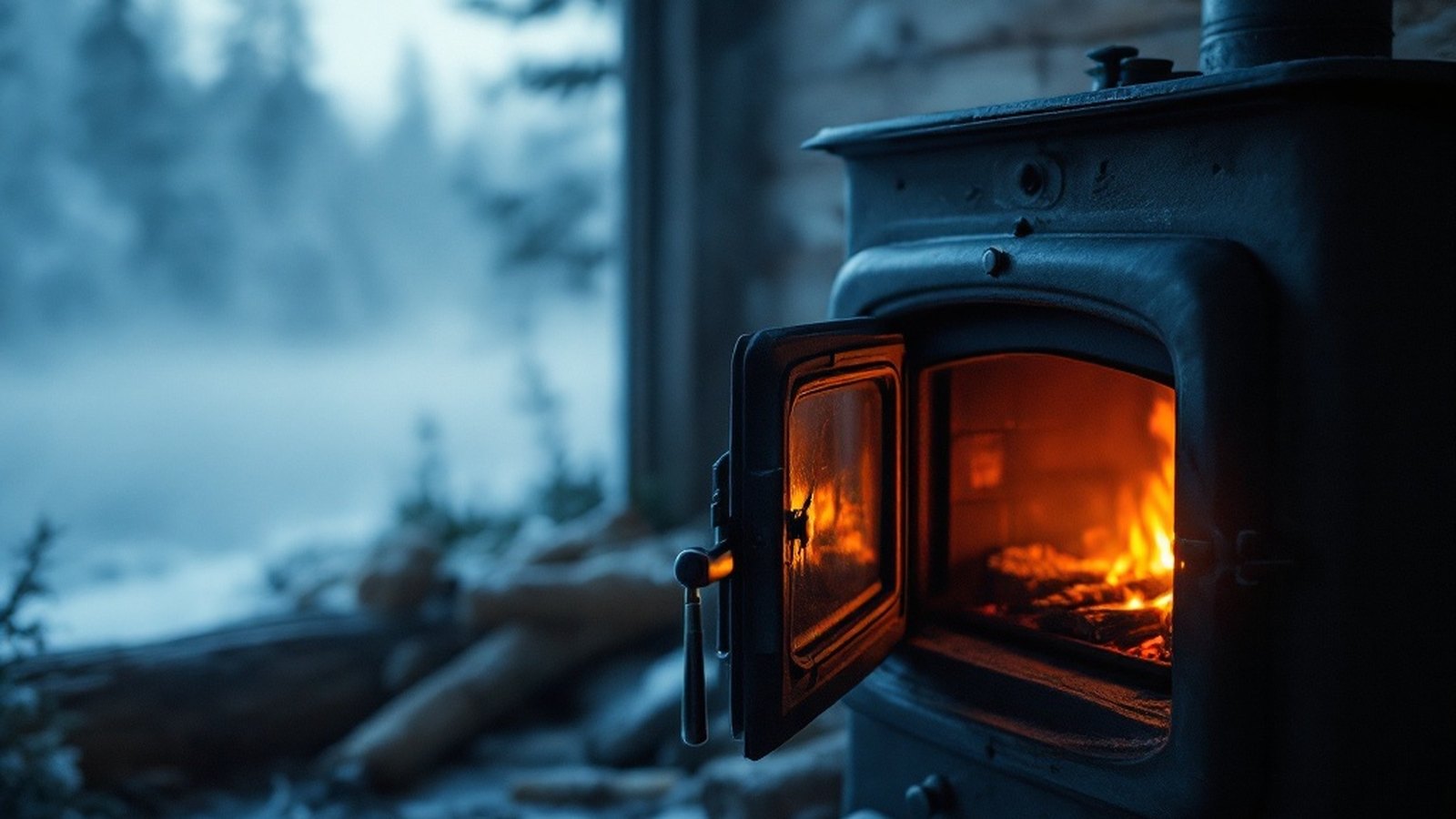
The stove sits roughly in the centre of one wall, a small iron thing, older than you by decades. It does not hum or click on. It requires you. The first fire of an evening takes longer than you expect: you split a little kindling, crumple the paper, coax the draught by leaving the door cracked the precise right amount. The wood catches, fails, catches again. For twenty minutes you are not thinking about anything else. This, it turns out, is the point.
A house with central heating asks nothing. You move through it without noticing the warmth, in the same way you move through the noise of a city without hearing it. The stove demands the opposite: tending, attention, the occasional trip outside into the cold to bring in another log. The fire tells you exactly how present you are. Let your mind drift for too long and you'll find yourself sitting in a cooling room, watching the embers fade.
02The honesty of proximity
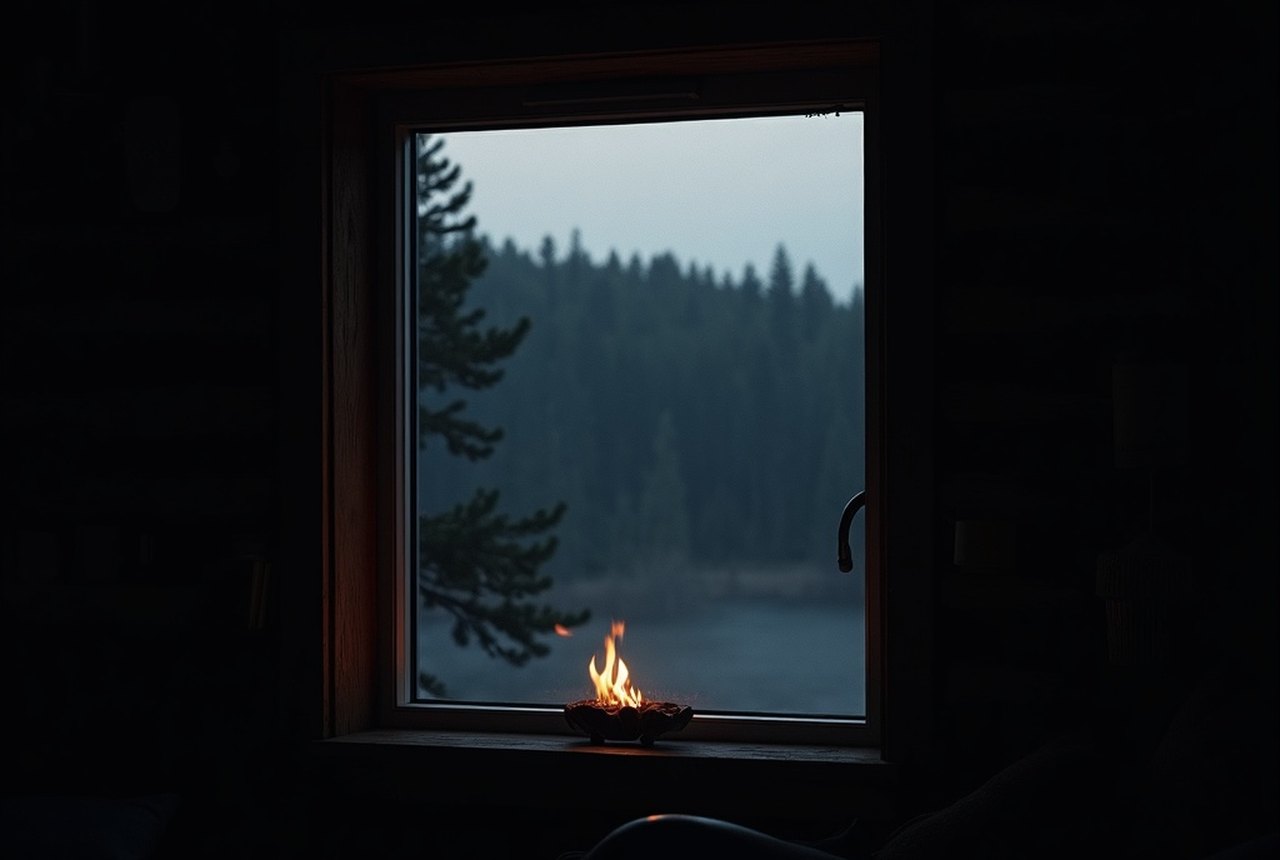
There is a single window. It faces the treeline, and by mid-afternoon the light through it is already angled and amber. The window is not large, but in a room this small it is sufficient — it frames a rectangle of the world and you look at it the way you'd look at a painting you'd hung deliberately rather than a screen you'd left on by accident.
The absence of charging becomes physical quickly. You register it first as a mild anxiety — the reach for the pocket, the hand that finds nothing — and then, by the second evening, as a kind of release. Whatever was demanding your attention has run out of ways to reach you. The urgency that felt structural, load-bearing, turns out to have been neither.
What remains when the distractions are removed is not emptiness. It's sequence: the light changes, the fire needs wood, you eat, you read by lamplight, the dark outside thickens. You are not bored. You are living at a pace your nervous system apparently recognises and has been missing.
The one-room cabin is honest in a way that a larger home rarely is. In a larger home you can avoid yourself: there's always another room to move into, another task to begin. Here, there is nowhere to relocate your mood. The small space holds you still and, in doing so, holds up a clear and unsentimental mirror. What you find there is rarely as bad as you feared.
03Evenings by the stove
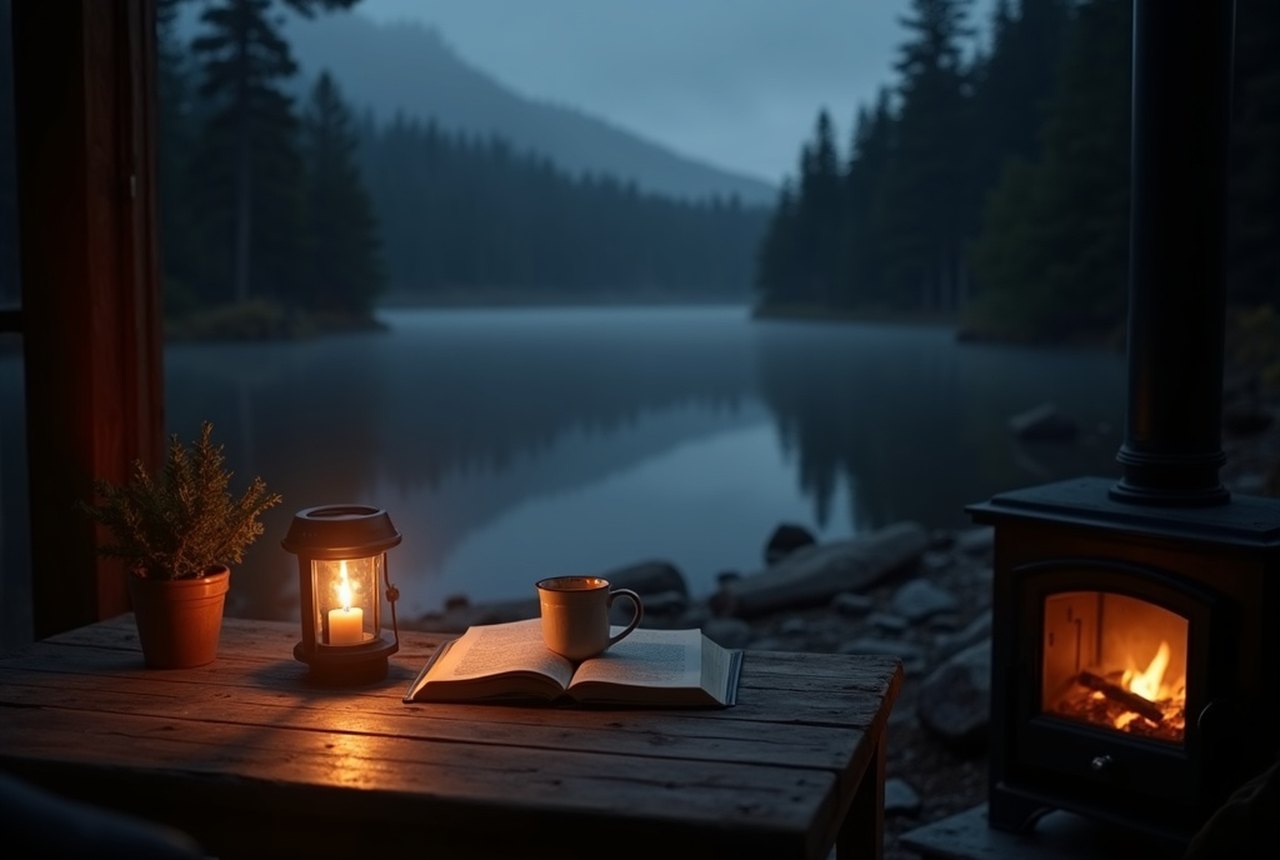
The evenings are the thing. The fire is settled now, the damper half-closed, the burn long and low. The lamp makes a small bright world of the table, the book, the cup. Everything else recedes into warm shadow. Outside: whatever weather there is. Inside: the tick of cooling metal when the fire breathes, the smell of woodsmoke embedded in the walls by years of other evenings, other people who needed exactly this.
You understand, sitting there, that most of what fills ordinary life is insulation — not against cold but against silence, against the unoccupied moment. The notifications, the background television, the open tab: all of it is material stuffed into the gaps to prevent you from having to sit still. The cabin removes the insulation. What's underneath is quieter than you remembered and, once you stop resisting it, surprisingly bearable.
Most of what fills ordinary life is insulation — not against cold but against silence.
By the time you have to leave, the space will feel less like a deprivation than like an argument you've been losing for years. Four metres by five. One window, one chair, one stove to tend. The arithmetic, it turns out, is not a reduction. It is a clarification.