01The map has two routes, and you should take the other one
There is always a shorter way. The path that cuts straight over the col, drops efficiently into the valley and has you back at the cabin before the afternoon turns cold. Someone drew that path — or more accurately, wore it into the ground by choosing it, repeatedly, over the longer alternative. Efficiency is persuasive. It has been persuading people for long enough to compact soil and strip bark from the gateposts.
You are going to take the other one.
Not because the long route is more beautiful, though it may be. Not because it visits better viewpoints or climbs a finer ridge, though it does both. You are going to take it because you came here, specifically, to stop making the efficient choice. Because the part of your brain that optimises and schedules and routes everything through the shortest path is the same part that has been running without rest for longer than you can clearly remember, and it needs — not a holiday, which it will fill with planning — but an entire day in which the only measure of success is arriving somewhere tired and clear.
That is what the long way round is for.
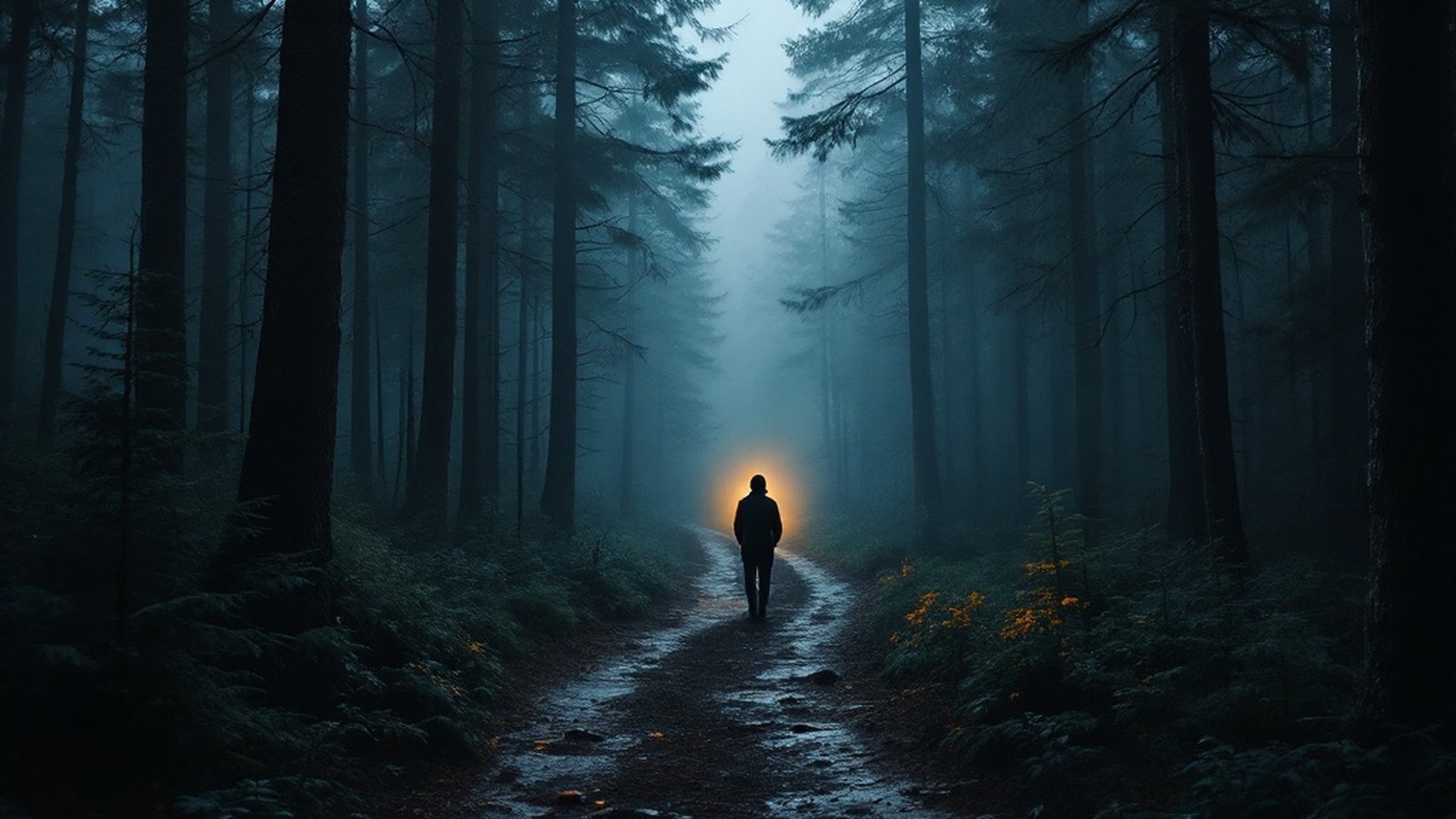
You start early, while the light is still horizontal and the forest floor holds the cold of the night. The trees here are dense at first: the path threads between trunks and you cannot see far in any direction. This is not oppressive. It is, in fact, a relief — that vast, overlit world of screens and open-plan offices replaced, for now, by something close and particular. A root. A patch of moss so green it looks painted. The place where a branch has fallen and the bark is already beginning to lift, the wood beneath gone to a dull silver. You start to notice at the pace of a person walking, which is the pace at which noticing becomes possible.
The first hour asks something of you. The body has not yet found its rhythm. Your mind is still dragging its freight: the inbox, the conversation left half-resolved, the low-grade anxiety that arrives each morning before you have remembered anything specific to be anxious about. Let it. The long route does not require you to arrive mentally anywhere in particular. It only requires that you keep moving, and that the ground beneath your feet be real.
Somewhere in the second hour — and this is not metaphor, this is simply what happens — the freight begins to lighten. Not because you have solved anything. Because the body in motion is not a good environment for abstract worry. Worry needs stillness. It needs a desk, a waiting room, the 3 a.m. ceiling. It does not travel well on rough ground where you need to watch your footing, where a steep section demands all your breath, where the treeline suddenly opens and there is the ridge, much further than you thought, sharp against the pale sky.
02What the ridge teaches, slowly
The ridge is the whole point, and also not the point at all.
From below it looks like a destination — a clear line, a horizon you can name. As you climb toward it through the upper trees, where the trunks thin and the wind begins to find you, it becomes a process. The path switchbacks. You lose sight of the ridge and find it again. A false summit fools you once, maybe twice. This is instructive in ways that don't require spelling out, though in the kindness of anonymity here — no colleagues, no performance — you can admit what the landscape is actually teaching you: that progress is not linear, and that arriving somewhere is almost never the thing you thought it would be. What you thought would be the summit is the beginning of the true ridge-walk, which is longer, stranger and more interesting than the approach.
Up here the wind is real. Not the ambient air-conditioning hum of temperature-managed buildings but actual moving air, with pressure and direction and a smell that carries the whole watershed: cold water, thin soil, something mineral and old. The ridge itself is narrow in places — a few paces wide, the ground falling away on both sides into different valleys, different weathers. This is one of the more clarifying physical experiences available to a person: standing on something narrow with sky on both sides. The mind stops narrating and simply inhabits the body, which is exactly where you needed it to be.
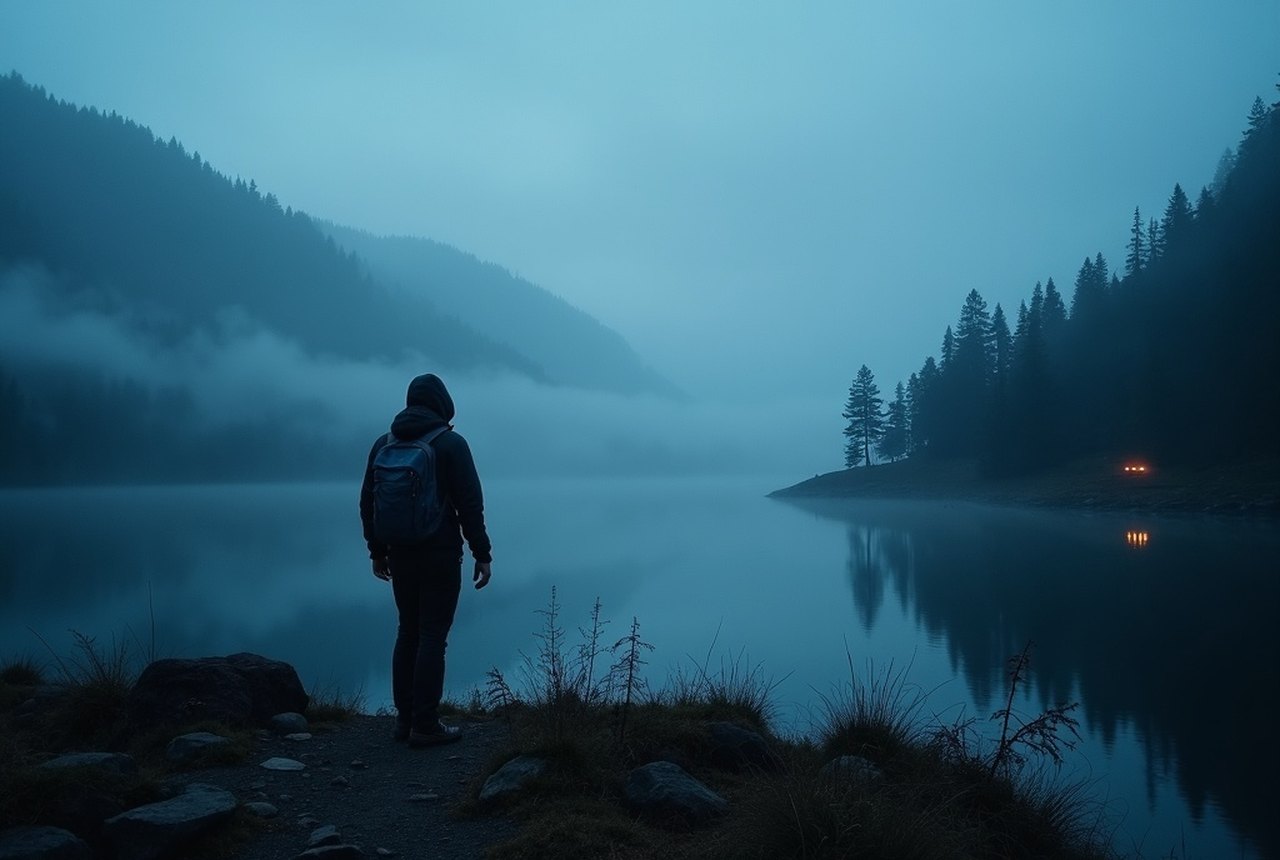
Walk the ridge at the speed it demands. Some sections are boulder-hopping, some are peat and bog requiring detours, some are short cropped grass where you can move easily and look out at the country below — the dark smudge of the forest you came through, the thread of the stream, the far shore of whatever body of water caught the light when you set out this morning. The world at walking pace has a scale that screen-delivered landscapes cannot replicate. It is large, and you are small, and this is not terrifying. It is the correct proportion of things.
The descent begins in mid-afternoon, when the light has shifted from white to something with more yellow in it, and your legs have the particular heaviness that means they have done real work. The far side of the ridge opens into a valley wider than the one you left, the path here more worn, the trees different — older perhaps, or just taller, the canopy closing in again as you drop. Your pace slows not from reluctance but from the gradient and the tiredness and, honestly, from not wanting it to end quite yet. You have been away from yourself for most of the day and found, on returning, that you are not such bad company.
- First lightInto the close, particular dark of the trees.
- The first hourThe body asks something of you; the mind drags its freight.
- Somewhere in the second hourThe freight begins to lighten. Not solved — set down.
- The ridgeNarrow ground, sky on both sides, the mind finally in the body.
- Mid-afternoonThe descent, legs heavy with real work.
- DuskBoots off at the door, tired and clear.
03The ethics of inefficiency
Here is what the slow route argues, quietly and without polemic:
That not everything worth doing should be optimised. That the body is not a vehicle for transporting the brain to the next appointment. That a full day in which you have produced nothing, solved nothing, and arrived somewhere only to turn round and walk back — or to sit outside the cabin with your boots off, watching the tree-shadow move — is not a day wasted. It may, in fact, be the most defensible day of the month.
Not everything worth doing should be optimised.
There is a long tradition of walking as thinking — of the deliberate, purposeless walk as the condition under which the most useful thinking happens, not in the sense of problem-solving but in the sense of reestablishing what the problems actually are, and whether they are as large as they seemed in the room where you left them. Philosophers have walked. Poets have walked. None of them, as far as we know, could have told you the direct route.
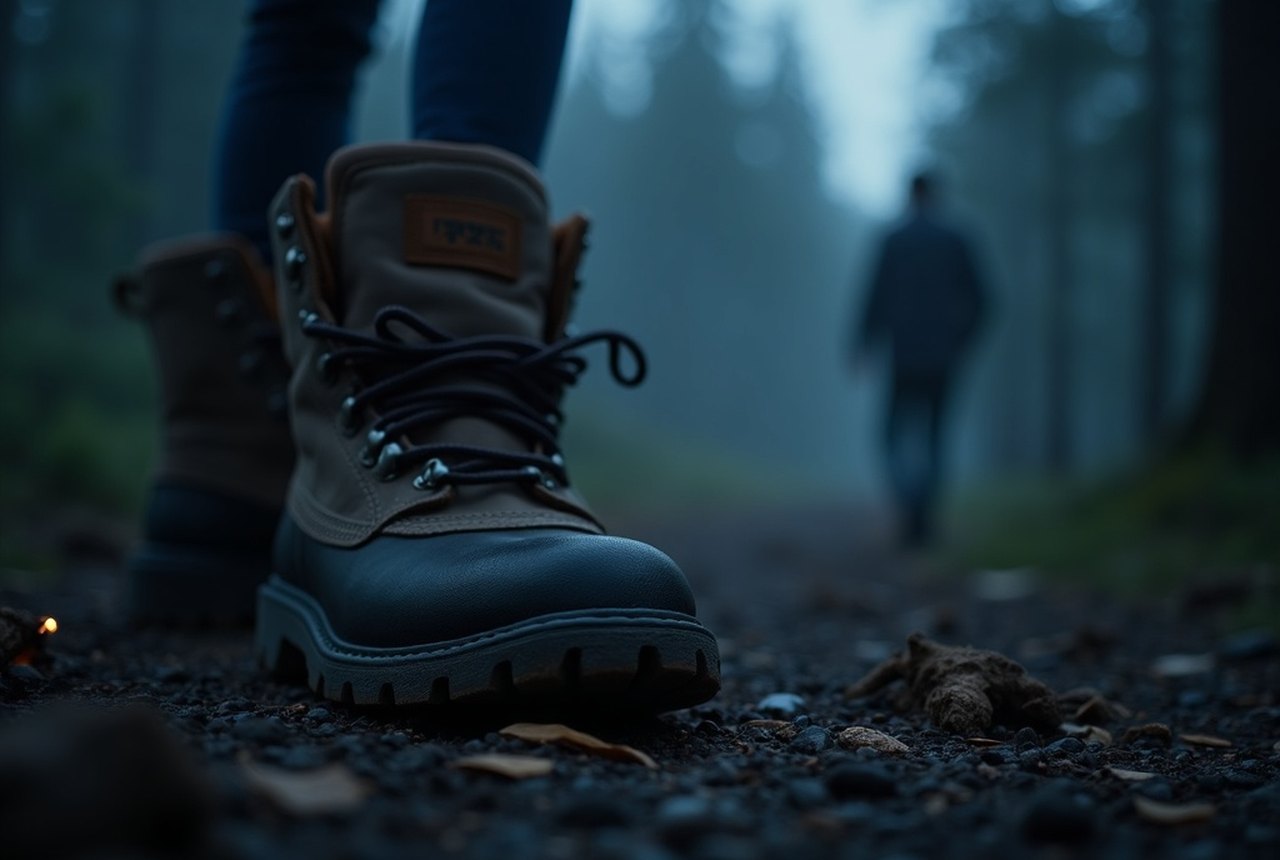
Inefficiency, chosen consciously, is not laziness. It is a counter-argument to a world that has decided your time is only worth something if it is being converted into output. The long way round is how you reclaim the hours as yours. Not productive hours. Just hours, thick with ground and weather and the slow passage of trees, in which your mind is allowed to do what minds do when you stop managing them: sort, settle, sometimes surprise you.
By the time you are back, the light is going. Your boots are damp. You are hungry in a way that is entirely physical, uncomplicated and satisfying. The door of the cabin opens and the warmth hits you and you sit down and take off your boots with the care of someone performing a small ceremony.
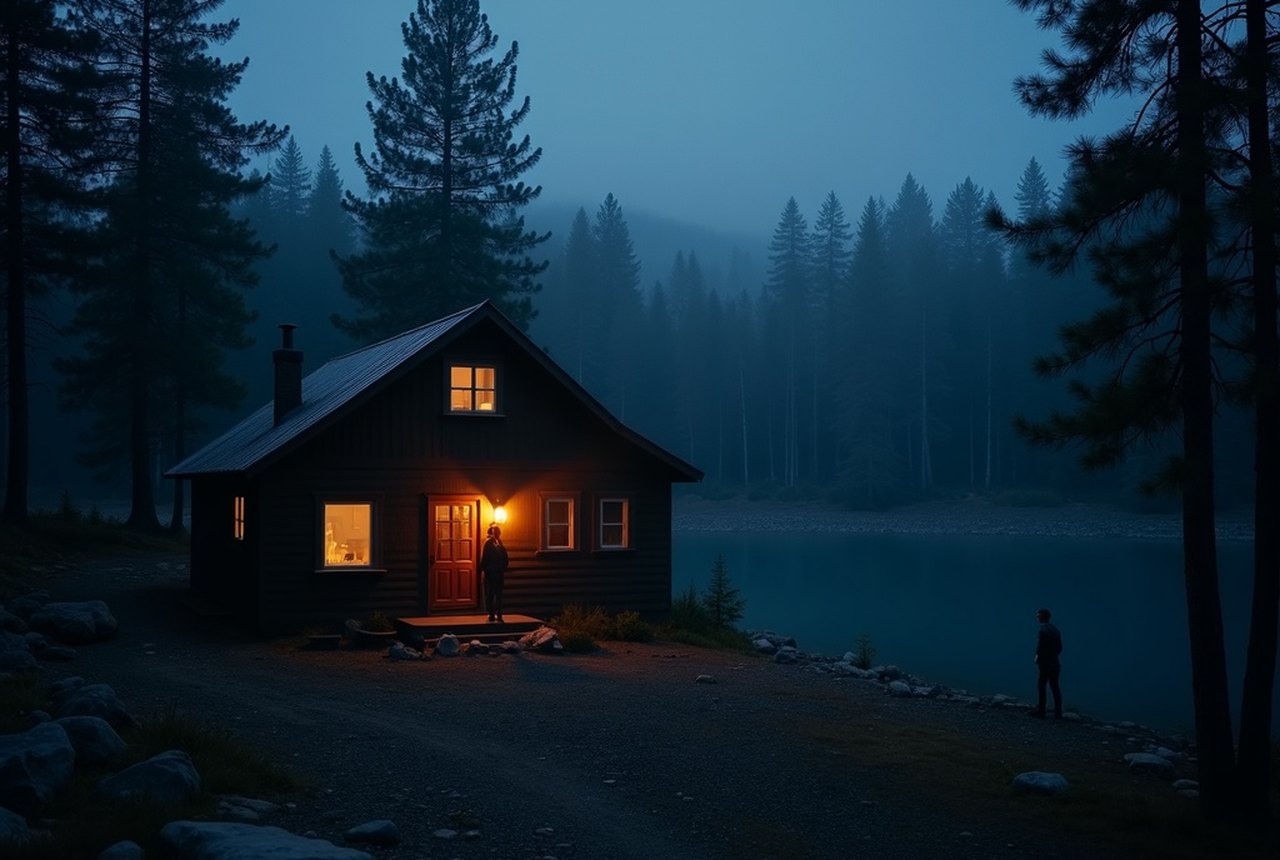
You did not solve anything. The inbox is where you left it. The half-resolved conversation is still half-resolved. But something that was knotted is now simply loose, and the looseness feels like the beginning of something — clarity, or patience, or just the ability to sleep the night through without the ceiling getting involved.
The long route took all day. It was correct to give it all day. That is the whole of what the ridge had to say, and it said it the only way it knows how: one slow step at a time, over ground that does not care how efficient you are, through weather that does not check your schedule, toward a tiredness clean enough to sleep in.